vs
Webrix vs. Archestra: Enterprise MCP Gateway Comparison
A balanced comparison for AI adoption leaders—managed enterprise platform with employee enablement vs. open-source cloud-native infrastructure with advanced AI security features.
Last updated: December 2025
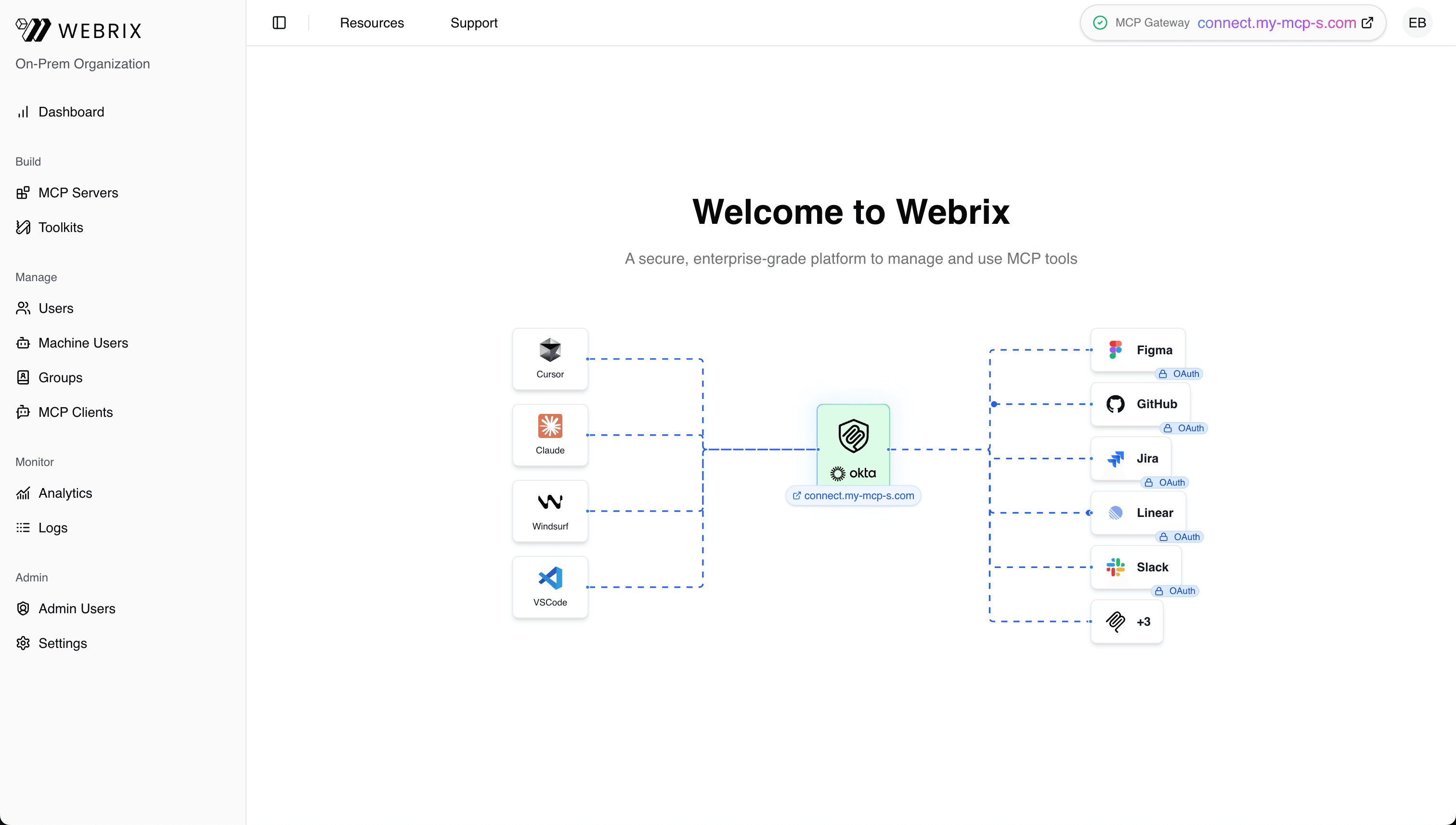
Webrix Admin Console
Complete enterprise AI adoption platform with admin controls, employee self-service, 100+ pre-built connectors, machine users, and governance for production deployments at scale.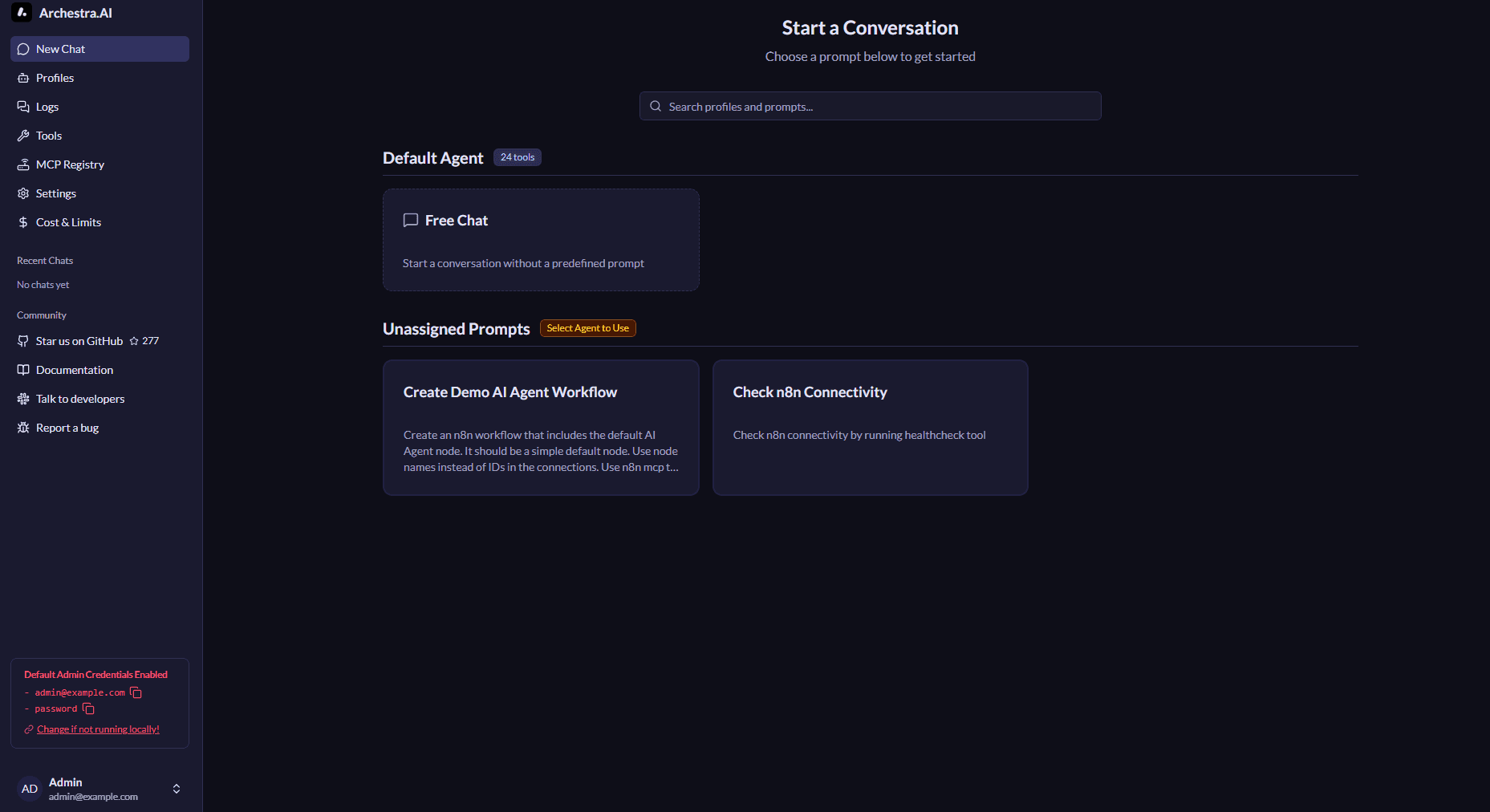
Archestra Control Plane
Open-source cloud-native platform with Kubernetes orchestration, Prometheus observability, Dynamic Tools security, Dual LLM protection, and 858+ built-in MCP servers.
The Bottom Line
Webrix is a managed enterprise MCP gateway with flexible deployment, employee self-service, machine users for automated workflows, and production-proven deployments at 5,000+ employee organizations. Archestra is an open-source cloud-native platform with extensive MCP catalog (858+ servers), advanced AI security features (Dynamic Tools, Dual LLM), and deep Kubernetes observability. Best for Webrix
Best for Archestra
Key Differentiator
Webrix offers managed deployment with employee self-service, machine users, and enterprise support. Archestra provides open-source infrastructure with 858+ MCP servers and advanced security features like Dual LLM prompt injection protection.Feature Comparison
| Feature | Webrix MCP Gateway | Archestra.ai |
|---|---|---|
| Deployment | On your cloud, on-premise, or SaaS | Docker (dev), Kubernetes with Helm (production) |
| Licensing | Commercial (Enterprise) | Open Source (free), Enterprise pricing unlisted |
| Authentication | OAuth2, OIDC, SAML SSO, API Tokens, JWT, Client Credentials, Server-to-Server | OAuth 2.0 + PKCE |
| SSO Providers | Okta, Microsoft Entra ID, JumpCloud with quick-start integrations | Generic OAuth 2.0 + PKCE |
| Identity & Access Control | RBAC, SCIM (Okta, Entra, JumpCloud), Groups, Permission Policies, Auto-Provisioning | RBAC, tool-call policies, per-identity rate limits, complete audit per tool call |
| Machine Users | Service accounts for automated workflows, agents, and integrations | Not supported |
| Built-in Connectors | 100+ pre-built MCPs | 858 built-in MCP servers |
| Admin Console | Full web-based admin interface | Full web-based admin interface |
| Employee Interface | Employee Connect panel (self-service) | ChatGPT-like chat interface with one-click MCP access |
| Management & Observability | Complete orchestration, audit trails, visibility dashboards | Complete orchestration, audit trails, Prometheus metrics, OpenTelemetry traces |
| Guardrails | Policy-driven limits, audit hooks, token handling, 3rd party guardrails integrations | Tool-call policies, rate limiting, Dual LLM sanitization, Dynamic Tools |
| Cost Management | Token usage monitoring and cost visibility | Per-team/agent cost limits, dynamic model optimization (up to 96% savings) |
| Enterprise Support | 24/7 dedicated support, onboarding | GitHub community support |
| Dedicated AE | Account Executive drives adoption success | Self-service or community support |
| Pricing | Transparent enterprise pricing | Free open-source, enterprise pricing unlisted |
| Status | Production (5,000+ employee deployments) | Active open-source development |
Who Each Solution Is Best For
Webrix is Best For:
Enterprises needing production-ready AI adoption with managed deployment, employee enablement, and dedicated support. Ideal if you:Need production-proven deployments at 5,000+ employee scale
Require employee self-service interface for faster adoption
Need machine users (service accounts) for automated AI workflows
Use Okta, Microsoft Entra ID, or JumpCloud for identity management
Want quick SSO setup and SCIM for automated user provisioning
Prefer managed infrastructure with dedicated vendor support
Need a dedicated Account Executive for adoption success
Require fine-grained policies and guardrails per agent/MCP
Archestra is Best For:
Organizations with Kubernetes expertise wanting open-source infrastructure with extensive integrations and advanced AI security. Ideal if you:Prefer open-source solutions with full source access
Have DevOps teams comfortable with Kubernetes and Helm
Need access to 858+ built-in MCP servers
Want advanced AI security features (Dual LLM, Dynamic Tools)
Need deep observability with Prometheus and OpenTelemetry
Want dynamic cost optimization with automatic model switching
Prefer community-driven development
Can manage your own infrastructure and support

Deployment & Infrastructure
Deployment model impacts time-to-value and operational complexity. The right choice depends on your infrastructure capabilities and support preferences.
Webrix offers flexible managed deployment:
SaaS Deployment: Fully managed by Webrix in SOC 2 compliant infrastructure
On-Premise: Self-hosted in your data center or private cloud (AWS, Azure, GCP)
Hybrid Model: Combine on-prem components with cloud management
No Kubernetes Required: Deploy without container orchestration expertise
Managed Updates: Vendor handles upgrades, patches, and infrastructure
Rapid Deployment: Most deployments completed within days
Archestra provides Kubernetes-native deployment:
Docker for Development: Quick local setup with single command
Kubernetes for Production: Production-ready Helm charts with 45ms p95 latency
Terraform Provider: Infrastructure-as-code automation for enterprise deployment
Self-Managed: You handle cluster management, scaling, and updates
Open Source: Full access to source code for customization
CNCF Ecosystem: Native integration with cloud-native tooling
Security & Access Control
Both platforms provide enterprise security, but differ in authentication options and AI-specific protections. The right choice depends on your identity infrastructure and security priorities.
Webrix delivers enterprise identity management:
SSO Quick-Start Integrations: Okta, Microsoft Entra ID, and JumpCloud with guided setup
SCIM Provisioning: Automated user provisioning and deprovisioning via Okta, Entra, JumpCloud
Comprehensive SSO: OAuth2, OIDC, SAML SSO for additional identity providers
Machine Users: Service accounts for automated workflows, agents, and integrations
Granular RBAC: Role-based access across teams, tools, and AI hosts
Token Vault: Centralized credential management—no secrets in prompts
Fine-Grained Policies: Per-agent and per-MCP guardrails and limits
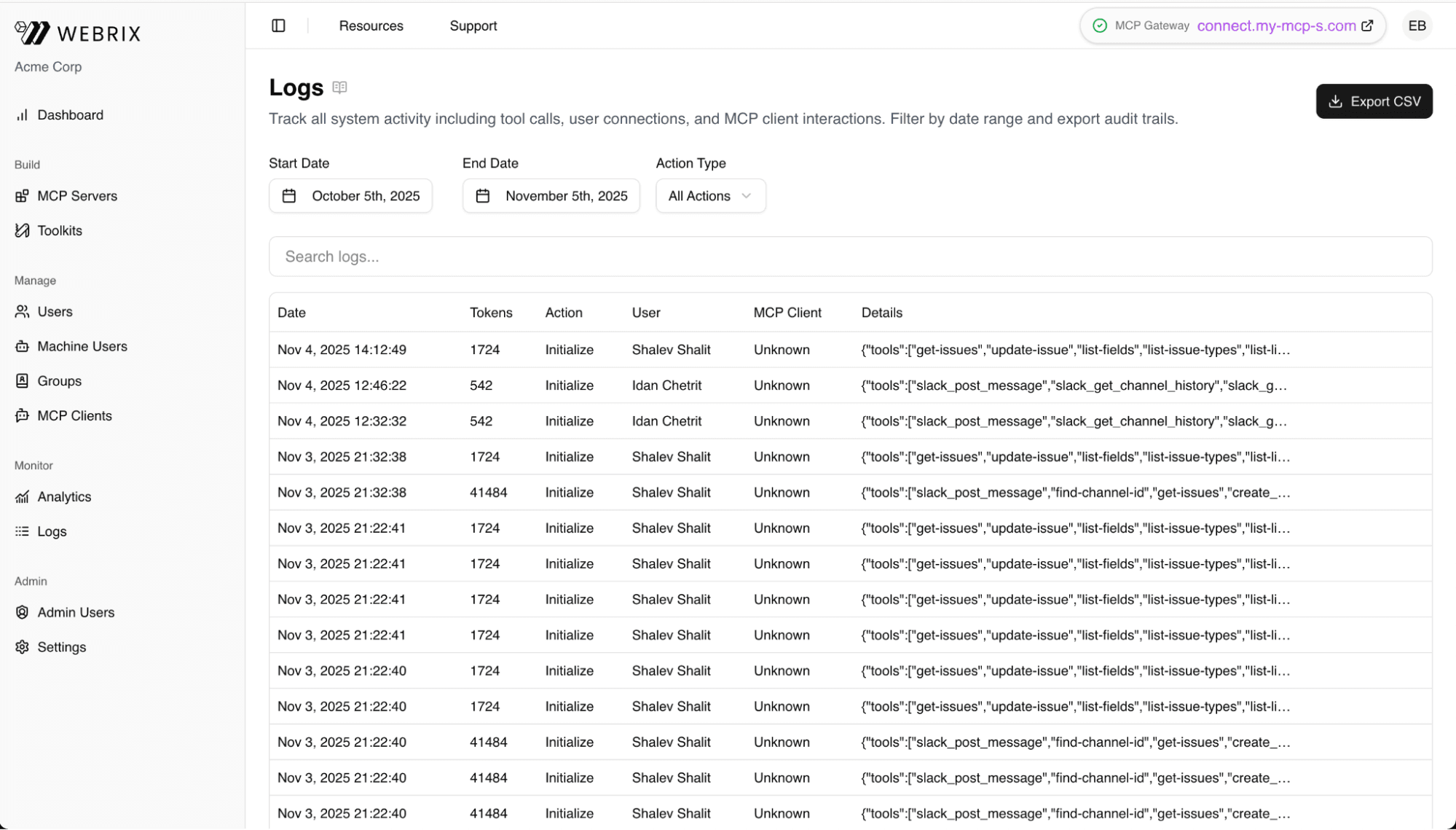
Audit Trails: Complete activity logs for compliance (SOC 2, HIPAA)
Archestra provides advanced AI security controls:
OAuth 2.0 + PKCE: Modern authentication with proof key for code exchange
Dynamic Tools: Automatically restricts agent capabilities when untrusted content enters context
Dual LLM Protection: Two-agent architecture to prevent prompt injection attacks
Tool-Call Policies: Per-tool and per-service access control lists
Per-Identity Rate Limits: Rate limiting per user identity
Complete Audit per Tool Call: Granular audit logging at tool invocation level
Secrets in Vault: HashiCorp Vault or Kubernetes Secrets with automatic rotation
Connectors & MCP Library
Connector availability directly impacts time-to-value. Both platforms offer extensive integrations with different approaches to curation and management.
Webrix provides curated enterprise connectors:
100+ Pre-built MCPs: Curated connectors for Slack, Jira, GitHub, Notion, Linear, Asana, and more
Wrap Any API as MCP: Turn REST APIs into governed MCPs in minutes
Employee-Driven Expansion: Teams propose new MCPs for org-wide approval
Centralized Library: Browse and manage all connectors from admin console
Version Control: Track MCP versions with rollback capabilities
IT-Governed Catalog: All MCPs vetted and managed by IT
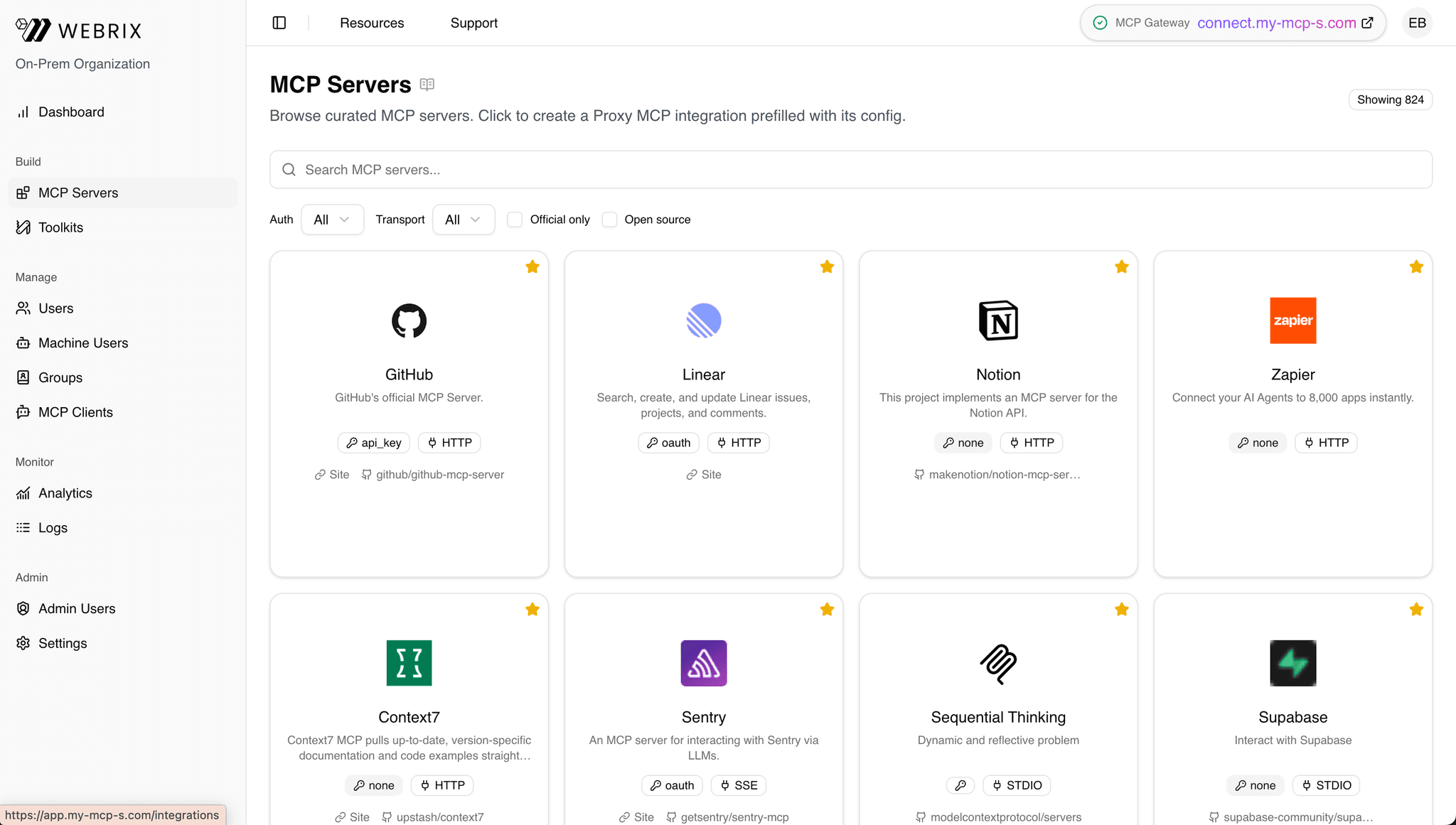
Archestra provides extensive open-source catalog:
858 Built-in MCP Servers: Extensive catalog of ready-to-use integrations
Private MCP Registry: Add self-hosted, remote, and third-party MCPs
Version Control: Track versions with full rollback capabilities
Access Management: Granular permissions and team-based access
Compliance Governance: Ensure deployments meet security standards
IT-Verified Trust Levels: Mark MCPs with trust indicators
Employee Experience & Adoption
Employee experience determines adoption velocity. Both platforms offer user interfaces, but with different philosophies—self-service adoption vs. chat-centric interaction.
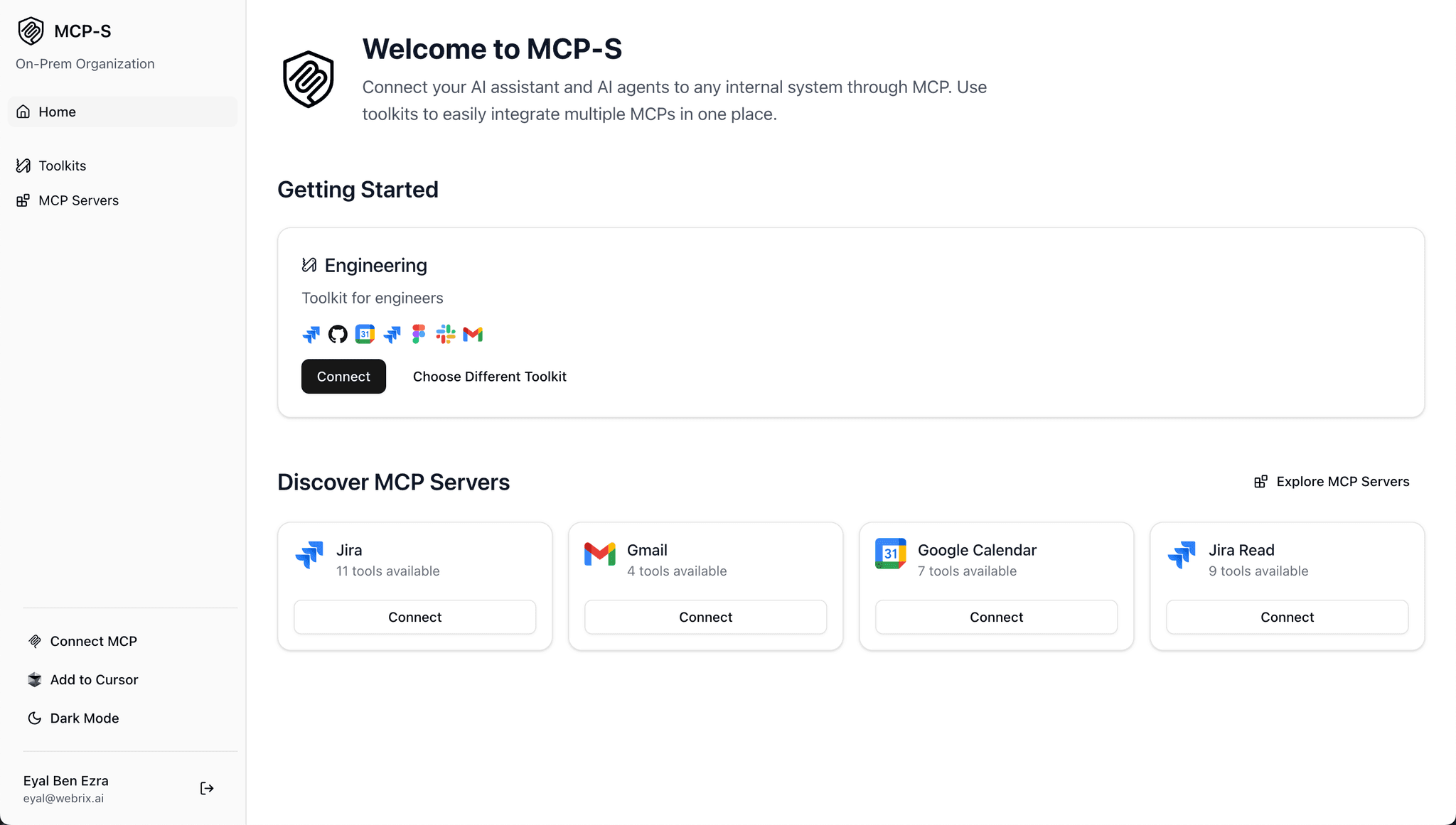
Webrix provides self-service employee enablement:
Employee Connect Panel: Clear visibility into available MCP servers, toolkits, and prompts
One-Click Integration: Connect approved AI agents (Cursor, Claude, VS Code) instantly
Org-Wide Resources: Access centrally managed toolkits and prompts
Self-Service Discovery: Browse and enable approved MCPs without IT intervention
Machine Users: Service accounts enable agent-to-agent workflows and automation
Adoption Acceleration: Self-service eliminates IT bottlenecks
Archestra provides chat-centric user interface:
ChatGPT-like Interface: Intuitive chat for technical and non-technical users
One-Click MCP Access: Connect to approved MCP servers from interface
Private Prompt Registry: Share and reuse prompts across organization
Multi-Model Support: Works with Claude, GPT-4, Gemini, and open-source models
Profile-Based Organization: Group interactions, tools, and policies per workflow
Built-in Chat Experience: No need for external AI clients
Management & Observability
Visibility into AI usage is critical for governance and optimization. Both platforms provide observability with different tooling approaches.
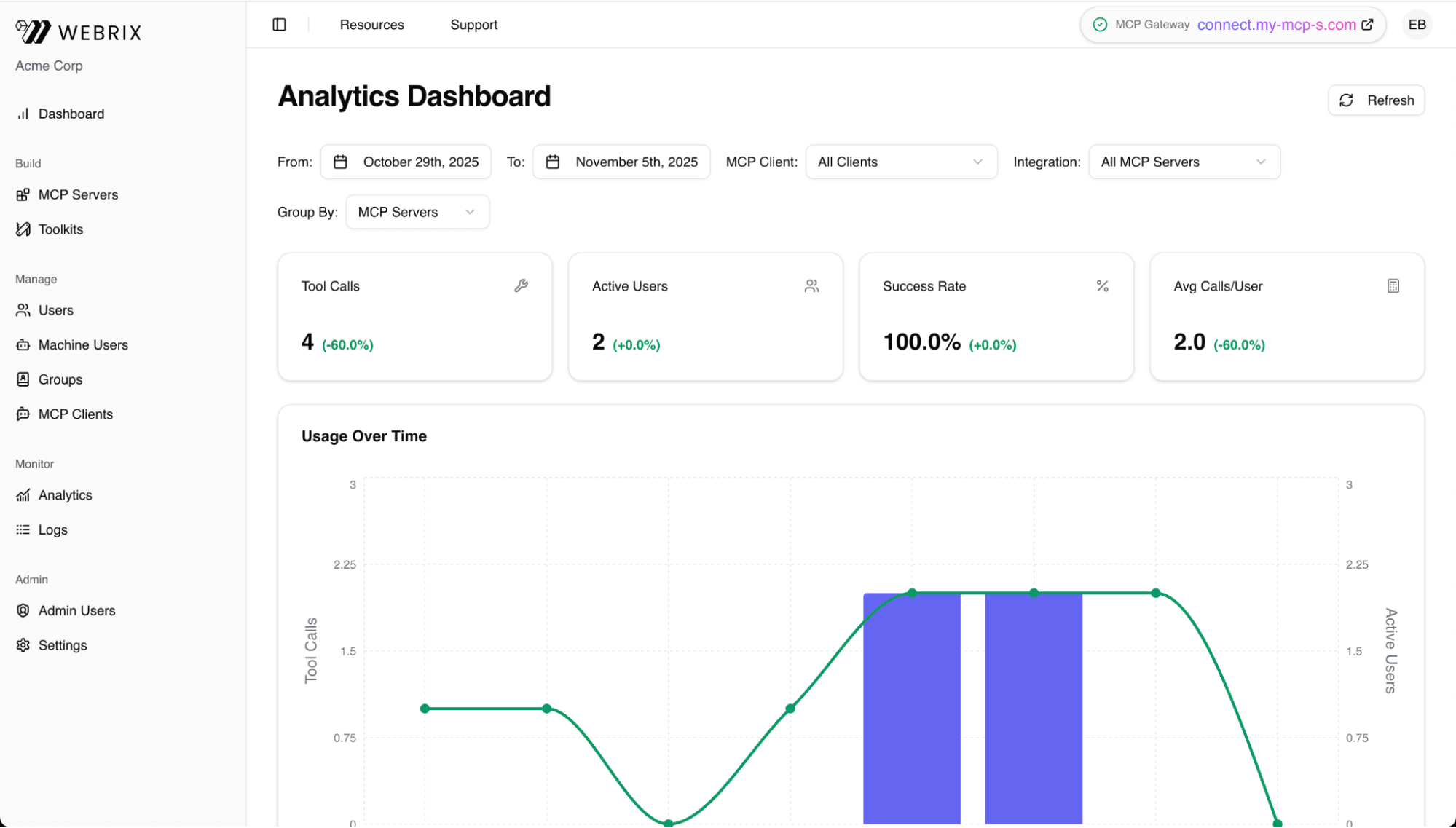
Webrix delivers enterprise management:
Admin Console: Centralized management of users, permissions, and connectors
Usage Analytics: Track adoption across teams, tools, and use cases
Audit Trails: Complete activity logs for compliance and security reviews
Cost Visibility: Monitor token usage and AI spend across organization
Policy Management: Fine-grained guardrails per agent, per MCP, per team
Production Proven: Deployed at 5,000+ employee enterprises
Archestra provides cloud-native observability:
Prometheus Metrics: Export LLM tokens, request duration, and system metrics
OpenTelemetry Traces: Distributed tracing with span attributes per LLM call
Pre-configured Grafana Dashboards: Ready-to-use monitoring dashboards
LLM Performance Metrics: Time to first token, tokens per second tracking
Cost Monitoring: Per-team, per-agent cost tracking with spending limits
Dynamic Optimization: Automatic model switching for up to 96% cost savings
Support & Success
Support model impacts deployment speed and long-term success. Choose based on your organization's self-service capabilities and support requirements.
Webrix provides dedicated enterprise support:
Dedicated Account Executive: Assigned to drive your organization's AI adoption success
Rapid Deployment: Most deployments completed within days
24/7 Support: Direct access via mutual Slack channel for real-time assistance
Proactive Guidance: Strategic counsel on rollout, governance, and optimization
Onboarding & Training: Hands-on training for admins and employees
Transparent Pricing: Clear enterprise pricing with SLAs
Archestra relies on community support:
Open Source Community: GitHub issues and discussions for support
Weekly Community Calls: Tuesday calls for Q&A and updates
Slack Community: Community chat for questions and peer support
Comprehensive Documentation: Self-service docs for deployment and configuration
Enterprise Demo: Book demos for enterprise requirements
Self-Service Model: You manage deployment and troubleshooting
FAQs
Yes, Archestra is open-source and free to use. Enterprise pricing is unlisted. Webrix offers transparent enterprise pricing that includes all features, connectors, and dedicated support with SLAs.
Join IT leaders deploying AI at enterprise scale with security, compliance, and governance built in.
© 2025 Webrix All Rights Reserved•SOC2 Compliant